Helping your child thrive with a brain that works differently
Understanding Neurodivergence in Teens: A Guide for Parents
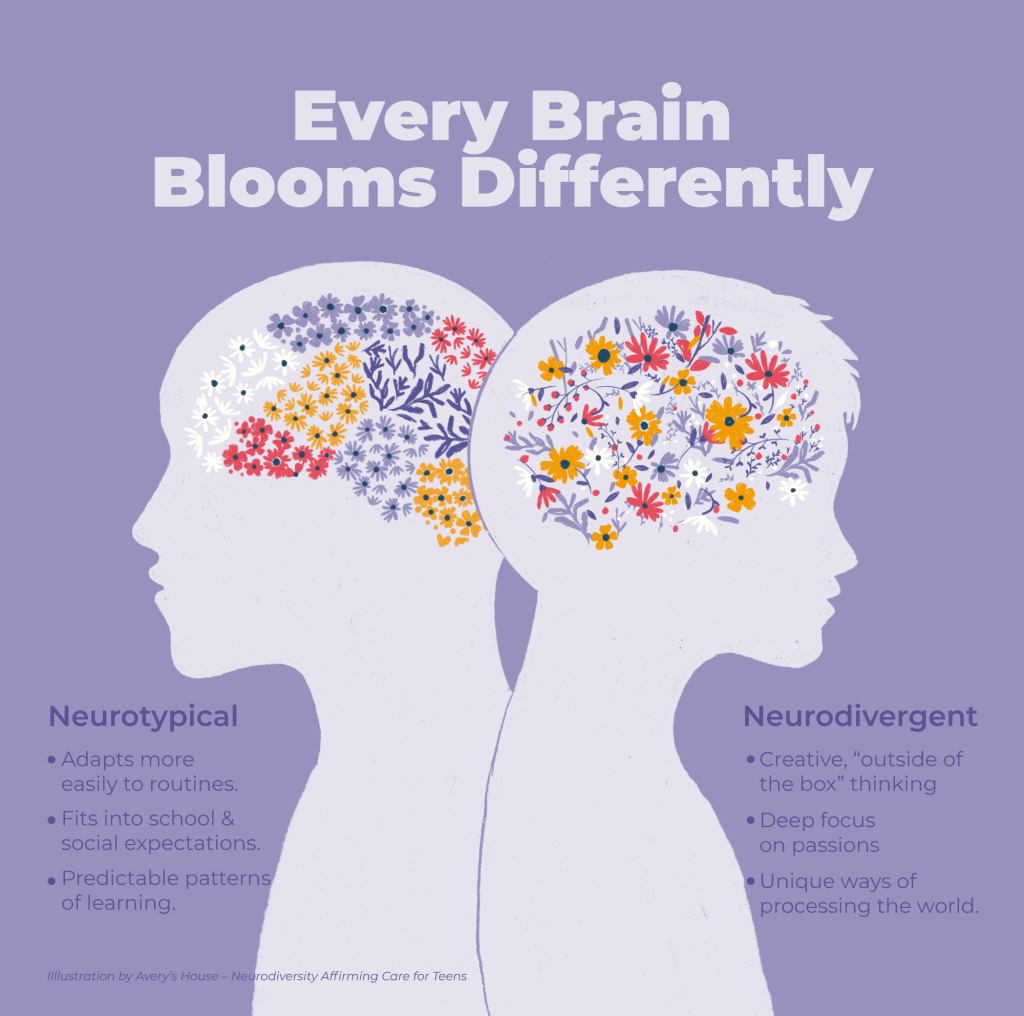
If your teen sees, hears, or feels the world differently than others, they may be neurodivergent. This isn’t a problem that needs a cure. It just means their brain is wired in a unique way.
At Avery’s House Arizona, we believe that understanding how your teen’s brain works is the first step toward a happier home life.
What it means to be neurodivergent
Neurodivergence describes people whose brains process information, emotions, and senses differently than what is considered typical.
It’s not a mental illness, but navigating a world built for typical brains can cause significant stress for a teenager. Common types of neurodivergence:
- Sensory processing disorder: High sensitivity to lights, sounds, or textures.
- Autism spectrum disorder (ASD): Differences in social communication and sensory processing.
- ADHD: Challenges with focus, impulsivity, and energy levels.
- Dyslexia or dysgraphia: Unique ways of processing language and writing.
Why neurodivergent teens often struggle
Most of the world—including schools and social circles—is designed for neurotypical people. For a neurodivergent teen, this can feel like trying to run Mac software on a PC computer.
Without the right support, these teens may face
- Social exhaustion: Trying to fit in takes a massive amount of energy.
- Sensory overload: Crowded hallways or loud classrooms can feel physically painful.
- Executive dysfunction: Struggling to start tasks, stay organized, or follow multi-step directions.
- Emotional burnout: Feeling “wrong” or “broken” can cause depression or anxiety.
Executive function: The brain’s manager
Many parents notice their neurodivergent teen struggles with getting things done. This is often due to executive function challenges.
Think of executive function as the brain’s internal manager. For many teens in our program, this manager needs a little extra help. Teens with executive function issues might struggle with
- Organization: Keeping track of school papers, clothes, or a daily schedule feels impossible.
- Starting tasks: They want to do their homework but can’t figure out the first step.
- Time management: They may lose track of time or misjudge how long a project will take.
- Emotional control: Small frustrations can lead to big emotional outbursts.
Navigating Arizona schools and social life
Arizona has a growing community of neurodivergent families, but the school system can still feel overwhelming. Whether your teen is in a public district in Mesa or a private school in Scottsdale, the social and academic pressure is high.
- The IEP and 504 struggle: Many parents find that school accommodations aren’t enough when a teen is in crisis. If your teen is refusing to go to school or failing classes despite being bright, it may be a sign of neurodivergent burnout.
- The Arizona environment: Our unique climate can actually impact sensory needs. High heat, bright desert sun, and even monsoon pressure changes can trigger sensory overload in sensitive teens.
The hidden cost of masking
Many teens learn to mask. Masking is when a neurodivergent person hides their true traits to seem “normal.” While it might help them get through a school day, it’s incredibly draining.
Long-term masking often leads to neurodivergent burnout. This is when a teen suddenly hits a wall and can no longer keep up with school, hygiene, or social life. Our goal is to help teens take off the mask and feel confident as their true selves.
Neurodivergence includes many different ways of thinking and learning. Some teens also experience overlapping mental health challenges.
Mental health challenges in neurodivergent teens
Neurodivergence rarely exists in a vacuum. Because these teens often feel out of sync with their peers, they are at higher risk for mental health struggles. In our Arizona programs, we often see these related conditions:
- Disordered eating: Picky eating can be a sensory response to certain food textures.
- Chronic anxiety: Constant worry about social rules or sensory changes.
- Depression and isolation: Feeling like no one understands them can lead to sadness and withdrawal.
- Sleep disorders: Neurodivergent brains may have trouble shutting down at night, which can be made worse by long Arizona summer days.
Neurodivergence is not a problem to be fixed. It’s a unique way of seeing the world.
We help your teen embrace their natural strengths while giving them the tools to navigate life with confidence and ease.
How to tell if your teen is neurodivergent
Many Arizona parents reach out to us when their teen hits the wall in high school. While every child is different, here are common signs that your teen’s brain may be wired differently:
- Meltdowns vs. tantrums: Their outbursts”seem less like they’re trying to get their way and more like they’re physically overwhelmed.
- The high school dip: They did well in elementary school but are now failing because they can’t keep up with more complex schedules.
- Sensory avoidance: They seem moody or difficult in bright, loud, or hot environments (like a crowded Phoenix mall or a pep rally).
- Intense interests: They have a deep-dive hobby that they focus on to the exclusion of almost everything else.
- Social confusion: They often misread sarcasm, struggle to make eye contact, or feel exhausted after spending just an hour with friends.
Practical ways to support your teen at home
Supporting a neurodivergent teen is about adjusting their environment so they can succeed. Here are a few ways to help your child feel safe and understood:
- Create a low-sensory zone: Given the bright Arizona sun and heat, ensure your teen has a bedroom with blackout curtains and a cool, quiet atmosphere where they can recharge.
- Use visual schedules: Don’t rely on verbal reminders. Use a shared digital calendar or a whiteboard in the kitchen to show exactly what the day looks like.
- Validate their experience: If they say a noise is too loud or a shirt is “itchy,” believe them. Their nervous system is truly feeling those things more intensely than yours.
- Focus on low-demand time: Give your teen at least one hour a day where nothing is expected of them. No chores, no homework talk—just time for them to be themselves.
- Explore local resources: Connect with groups like the Arizona Autism Coalition or attend local sensory-friendly events in the East Valley to help your teen find a community where they don’t have to mask.
How Avery’s House supports neurodivergent teens in Arizona
At Avery’s House, we’ve created The Nest. This specialized program is designed specifically for neurodivergent teens who need a higher level of care.
We won’t try to change who your teen is. We give them the tools to navigate the world more easily.
- Modified therapy: We use evidence-based tools like DBT and CBT, adjusted for the way neurodivergent brains process information.
- Low-sensory environments: Our homes are designed to be calm, quiet, and predictable.
- Clear structure: We provide a steady daily routine that lowers anxiety and helps with executive function.
- Social coaching: We help teens build real connections in ways that feel natural to them, focusing on double empathy rather than forced social rules.
Helping your teen find their wings
You don’t have to figure this out alone. If your teen is struggling to thrive in a traditional environment, they may need a space designed specifically for the way they think.
- Learn more about The Nest: See how our Arizona neurodivergent program works.
- Speak with a specialist: Call us at (480) 613-4920 to discuss your teen’s unique needs.
- Verify your insurance: Let us help you determine if plan covers support for neurodivergence.